

Wootric still does the always-on NPS job. It also feels like a product that now lives inside someone else’s enterprise roadmap.
For many SaaS teams, that split is the real problem. Wootric is now part of InMoment, pricing is demo-first and custom, and the product still stays centered on NPS, CSAT, and CES. Delighted’s shutdown shows the same risk from another angle: a lightweight NPS tool can become a migration project when its parent company moves on. If you are comparing legacy CX tools, use the Delighted pricing breakdown as a useful benchmark for response caps and replacement planning. If you need onboarding, activation, product-market fit, churn, or richer in-product discovery surveys, you often end up adding another tool.
Here are 9 alternatives. We compared them on survey scope, in-product timing, pricing clarity, and SaaS fit.
Quick Comparison
| Tool | Best For | Starting Price | Survey Scope | Free Plan |
|---|---|---|---|---|
| Pulseahead | SaaS lifecycle surveys with flat pricing | $48/month | In-product surveys beyond NPS, CSAT, and CES | Yes |
| Refiner | Dedicated SaaS microsurveys with deeper segmentation | $99/month | Broad in-app, mobile, email, and link surveys | Yes |
| Survicate | Multi-channel feedback with AI analysis | $89/month | Broad survey coverage plus feedback hub | Yes |
| Iterate | Mobile-first surveys with lighter entry pricing | From $25/month | In-app, mobile, and email with add-ons | No |
| Nicereply | Support-led CSAT, CES, and NPS workflows | $79/month | Classic CX metrics, support-centric | No |
| Simplesat | Service-heavy teams running ticket feedback | $119/month | Classic CX metrics for helpdesk workflows | No |
| Pendo | Product teams buying analytics, guides, and surveys together | Custom | Surveys inside a broader product suite | Yes |
| SurveyMonkey | Research-led teams needing broader survey distribution | $30/user/month | Broad survey builder, not in-product-first | No |
| Zonka Feedback | Enterprise omnichannel CX programs | Custom | Broad CX intelligence across channels | No |
1. Pulseahead: Best for SaaS lifecycle surveys without enterprise-suite baggage
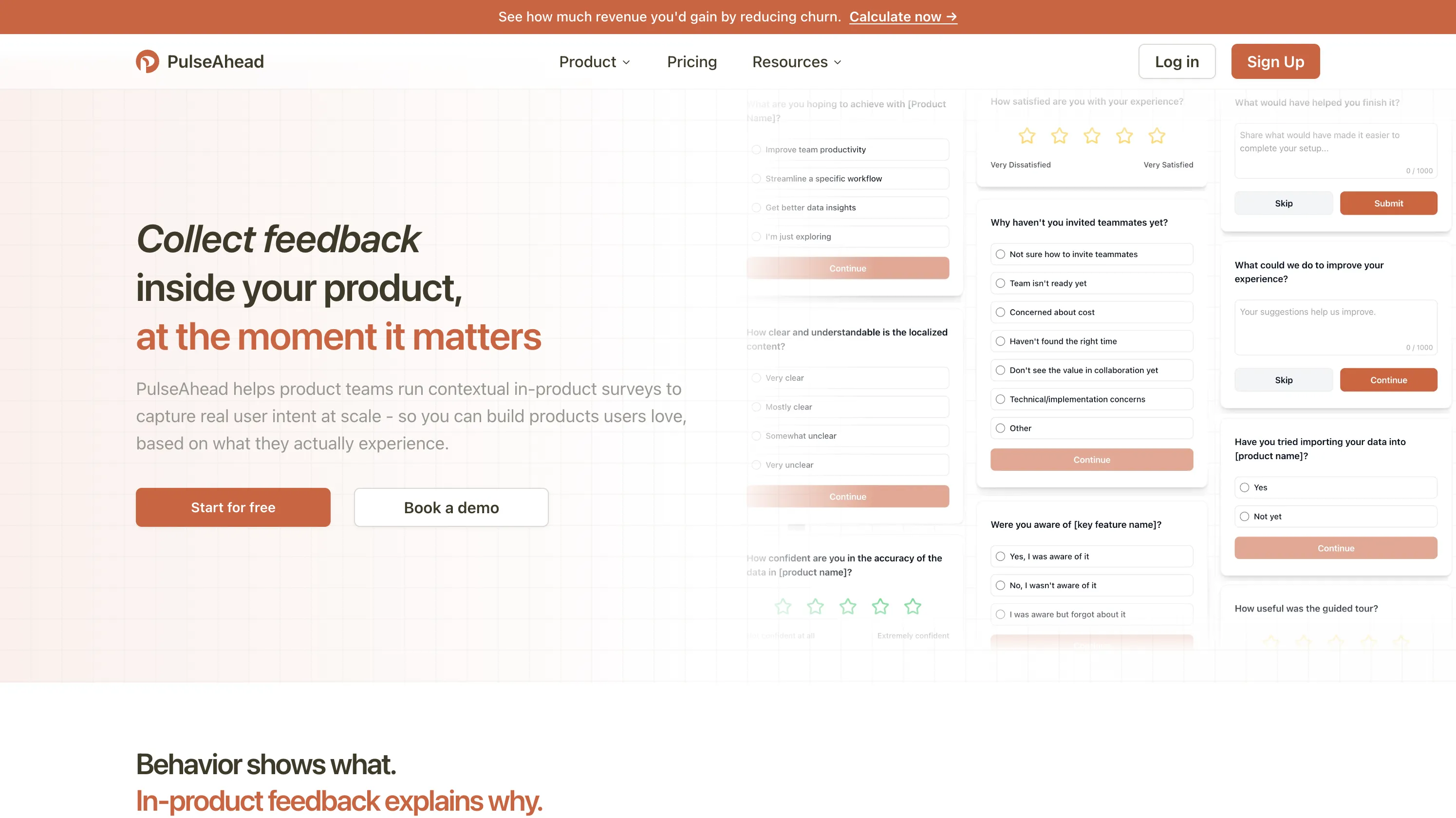
Most SaaS teams leave Wootric because they want feedback inside the product, but need more than a recurring NPS pulse. Pulseahead is built for that job.
It gives you in-product surveys built for SaaS timing and clear pricing from the start. Instead of stretching a classic CX metric tool into onboarding, activation, and churn work, you start with a product that already assumes those use cases matter.
What Pulseahead does well:
- Broader survey coverage - Run onboarding, activation, product-market fit, churn, profile, and NPS surveys from one workflow, not just NPS, CSAT, and CES.
- Useful in-product timing controls - Target by days since signup, session count, URL, browser, OS, country, platform, and user attributes. If your app needs exact control, use manual SDK trigger.
- Predictable pricing - Core is $48/month for 5,000 responses. Pro is $108/month for 10,000. No custom quote just to understand your budget.
- SaaS Survey Pack - Launch six lifecycle surveys together, adjust the shared setup once, and start with a pre-built dashboard.
What Pulseahead doesn’t do:
Pulseahead focuses on web and mobile web, not native iOS or Android SDKs. It also stays in-product, so if you need email, SMS, or link surveys in the same tool, one of the broader platforms below covers more ground.
Worth it if: You liked Wootric’s always-on feedback idea, but need a tool that covers more SaaS moments without enterprise procurement friction.
Try Pulseahead free and run your first in-product survey in under 10 minutes.
2. Refiner: Best for dedicated SaaS microsurveys with deeper segmentation
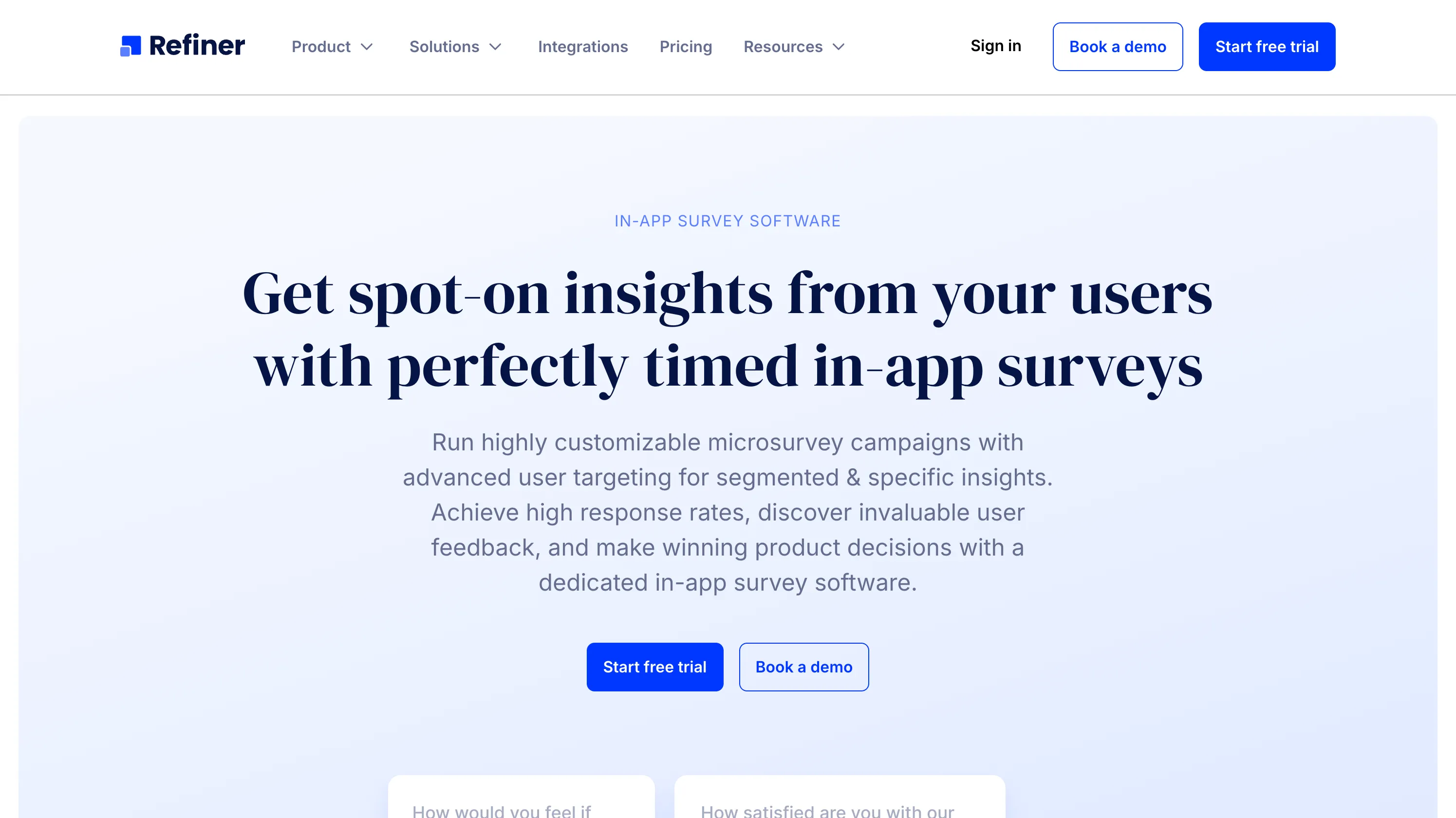
Refiner is the closest specialist replacement if you still want a dedicated survey tool, just with more targeting depth than Wootric.
Pricing is public, which already makes evaluation easier: $99/month at 5k MAU, $149 at 25k MAU, and $229 at 100k MAU on Essentials.
What Refiner does well:
- Deeper segmentation - Target by user traits, onboarding milestones, behavior, and churn-risk style cohorts more precisely than Wootric’s classic metric setup.
- Stronger channel coverage - Web, native mobile, email, website popup, and survey page delivery from one product.
- Serious SaaS integrations - Segment, RudderStack, Mixpanel, Amplitude, HubSpot, and Salesforce.
- Unlimited responses on paid plans - Cost scales with MAU, not with response volume.
What Refiner doesn’t do:
It does not solve MAU pricing anxiety. As your product grows, the bill still climbs with monthly active users. See Refiner pricing for more details.
The honest take: Best for mid-market SaaS and mobile-first teams that want a dedicated microsurvey product and can live with MAU-based pricing.
3. Survicate: Best for multi-channel feedback with more automation
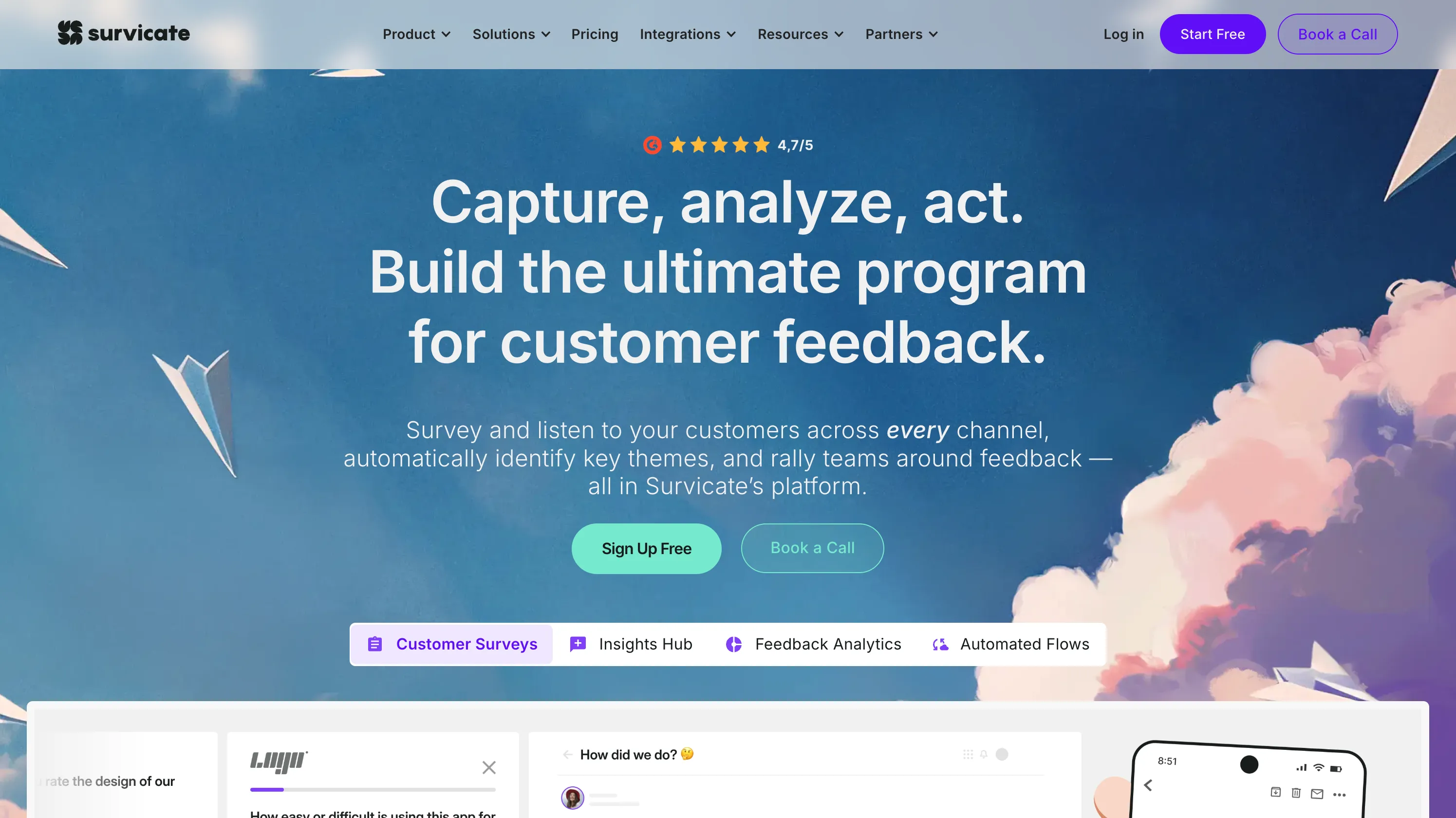
Survicate is the better Wootric alternative when the real need is broader coverage, not just better in-app surveys. It handles web, in-product, mobile, email, and links, then also pulls feedback in from reviews and tickets. Starter is $89/month for 100 responses, $179 for 250, and key targeting controls move up to annual plans. See our Survicate pricing breakdown for the full response-limit and annual-billing details.
What Survicate does well:
- Broader channel mix - In-app, mobile, email, links, and website surveys from one dashboard.
- Broader survey coverage - NPS, CSAT, CES, PMF, open-ended research, and longer custom surveys.
- AI feedback hub - Centralizes and categorizes feedback from surveys, app stores, reviews, and support sources.
- More modern workflow - Stronger automation and insight routing than Wootric’s narrower metric program.
What Survicate doesn’t do:
At scale, Survicate gets expensive quickly. If you mostly need recurring in-product SaaS surveys, it can feel like you are paying for a broader hub than you actually need.
Where this fits: Best for teams that want one platform for multi-channel feedback, not just a stronger version of Wootric’s in-product pulse surveys.
4. Iterate: Best for mobile-first teams that want a lighter entry point
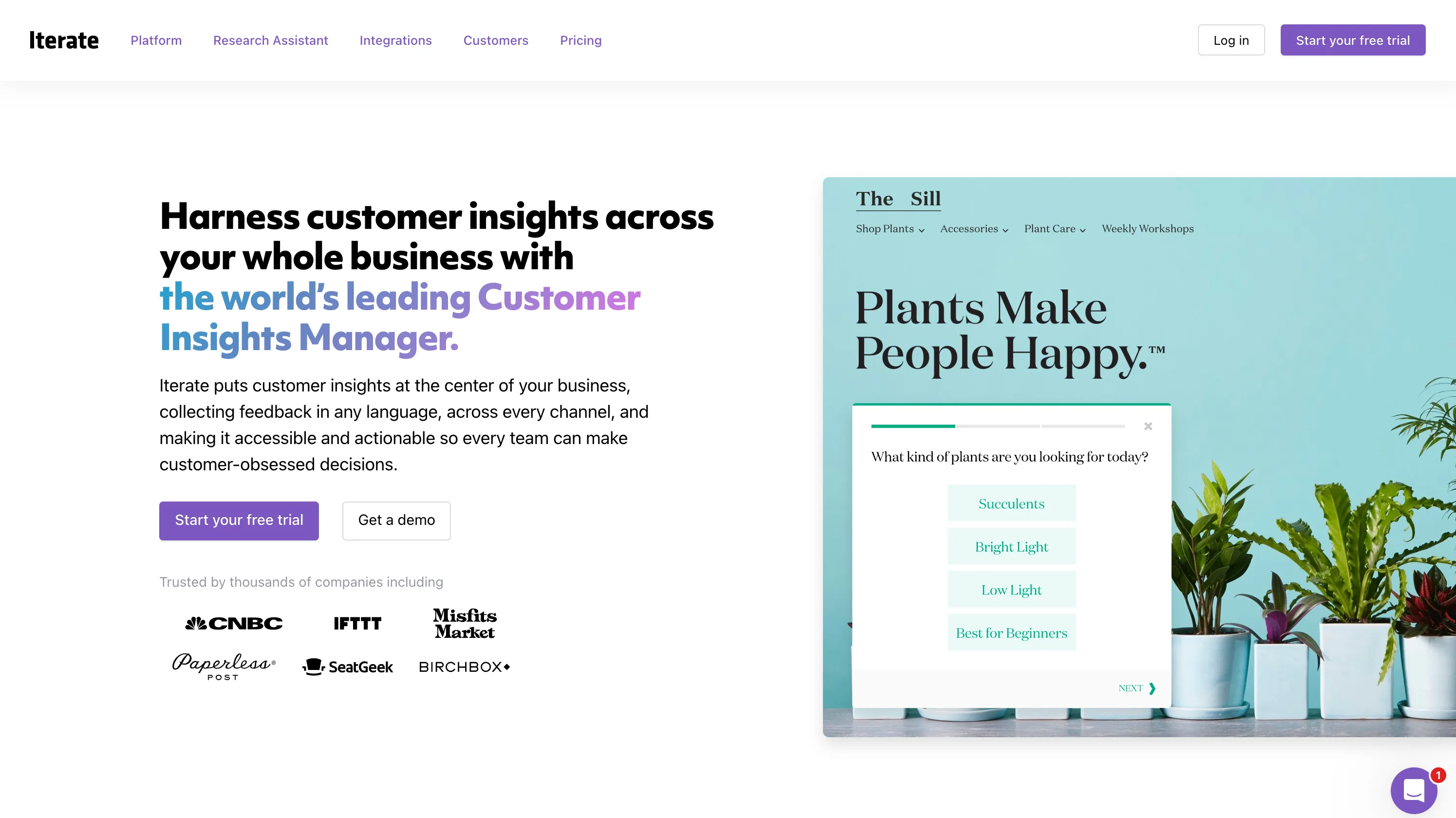
Iterate is a good Wootric alternative when native mobile matters more than enterprise CX polish. It starts cheaper and is built around branded in-app experiences.
Base pricing starts around $25/month for 10,000 monthly active users, but white label, premium integrations, and the research assistant add cost.
What Iterate does well:
- Lower entry point - Easier to get started than a demo-first enterprise motion.
- Mobile-first survey UX - Better fit for app teams that care how surveys feel inside native experiences.
- Branded experiences - Strong white-label and presentation control for polished in-app surveys.
- Unlimited responses - Paid plans are not capped by response volume.
What Iterate doesn’t do:
The plan structure gets messy once you add integrations, white label, and research tooling. Reporting is also lighter than Wootric users may expect.
What you’re choosing: Best for startups and mobile-heavy products that want simpler commercial entry and do not need a bigger CX reporting layer.
5. Nicereply: Best for support-led CSAT, CES, and NPS workflows
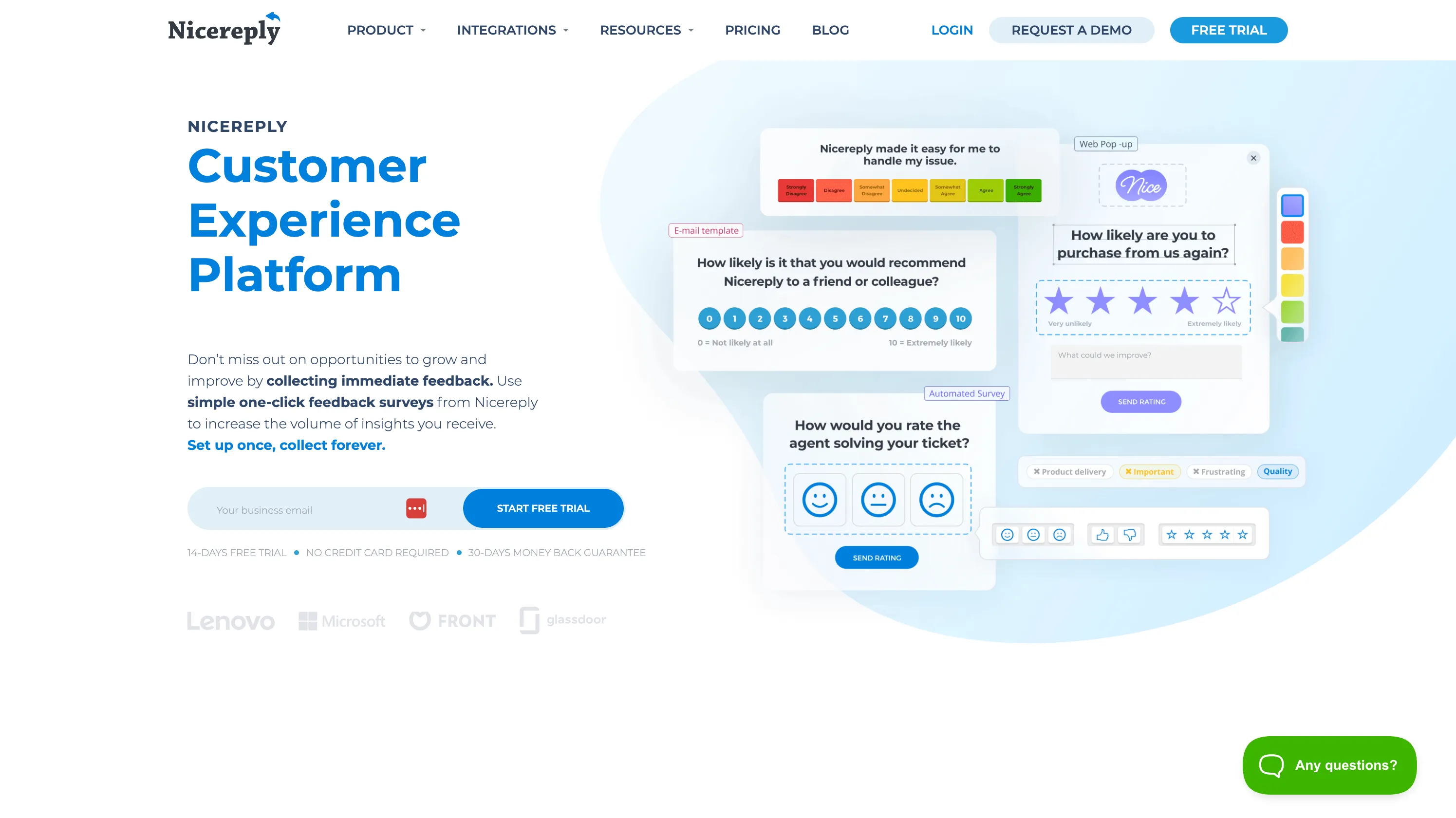
Nicereply is not a product feedback replacement for Wootric. It is a better fit if your use case is support feedback and agent-level reporting.
The starting price looks low, but it is thin: $79/month covers 100 responses, while 1,000 responses costs $299/month.
What Nicereply does well:
- Helpdesk-native workflow - Strong integrations with Zendesk, Freshdesk, Help Scout, Front, and similar tools.
- Fast post-support collection - Post-resolution and in-signature surveys fit support teams naturally.
- Agent and team reporting - Better operational visibility for support managers than Wootric’s product-CX orientation.
- Simple classic metrics - Clean CSAT, CES, and NPS workflows without extra CX suite weight.
What Nicereply doesn’t do:
It is not built for in-product lifecycle feedback. If your reason for leaving Wootric is narrow survey scope, Nicereply stays in that same narrow lane, just with a support-first audience.
Worth it if: Your feedback program lives in support, not inside the product, and you want the tooling to reflect that.
6. Simplesat: Best for service-heavy teams running ticket feedback
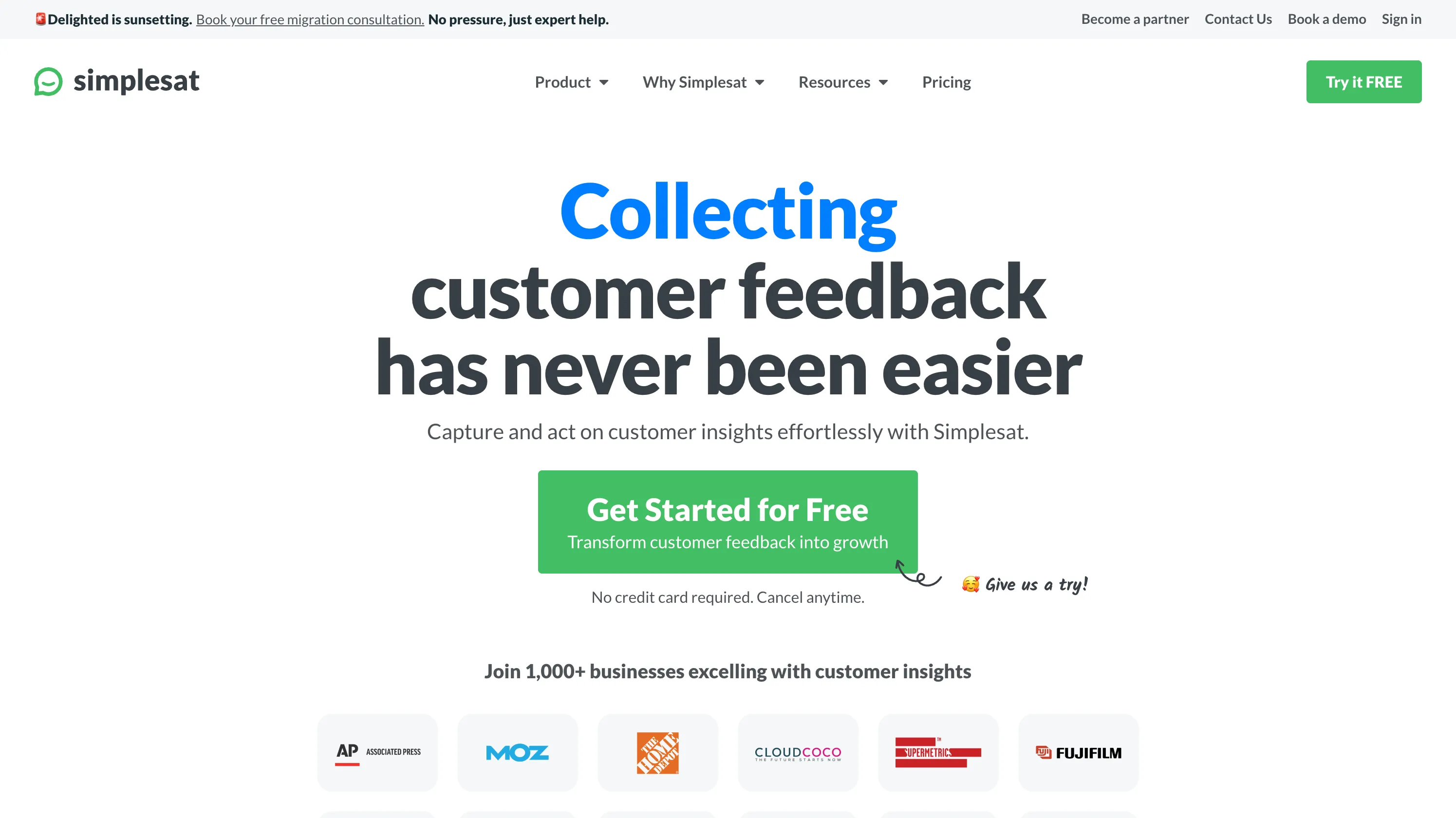
Simplesat makes more sense for service businesses than product-led SaaS teams. If your Wootric program has drifted toward post-ticket CSAT and quarterly NPS, Simplesat is often the more natural fit.
$119/month covers 1,000 responses and 15,000 monthly emails, with higher tiers built for bigger support teams.
What Simplesat does well:
- Service-team integrations - Stronger fit with helpdesk-heavy workflows than Wootric’s broader SaaS positioning.
- Operational feedback loops - Practical for recurring CSAT, autopilot NPS, and review-driving workflows.
- AI topic tagging - Useful for organizing qualitative feedback without a lot of manual cleanup.
- Custom reporting - Better for tracking support and service performance over time.
What Simplesat doesn’t do:
It is still not an in-product research tool. For SaaS product teams that want feedback tied to onboarding, activation, or churn moments inside the app, it is the wrong shape.
The honest take: Good option for support-led and service-heavy teams. Weak fit for product-led SaaS teams leaving Wootric because they want more in-app survey depth.
7. Pendo: Best for product teams buying analytics, guides, and surveys together
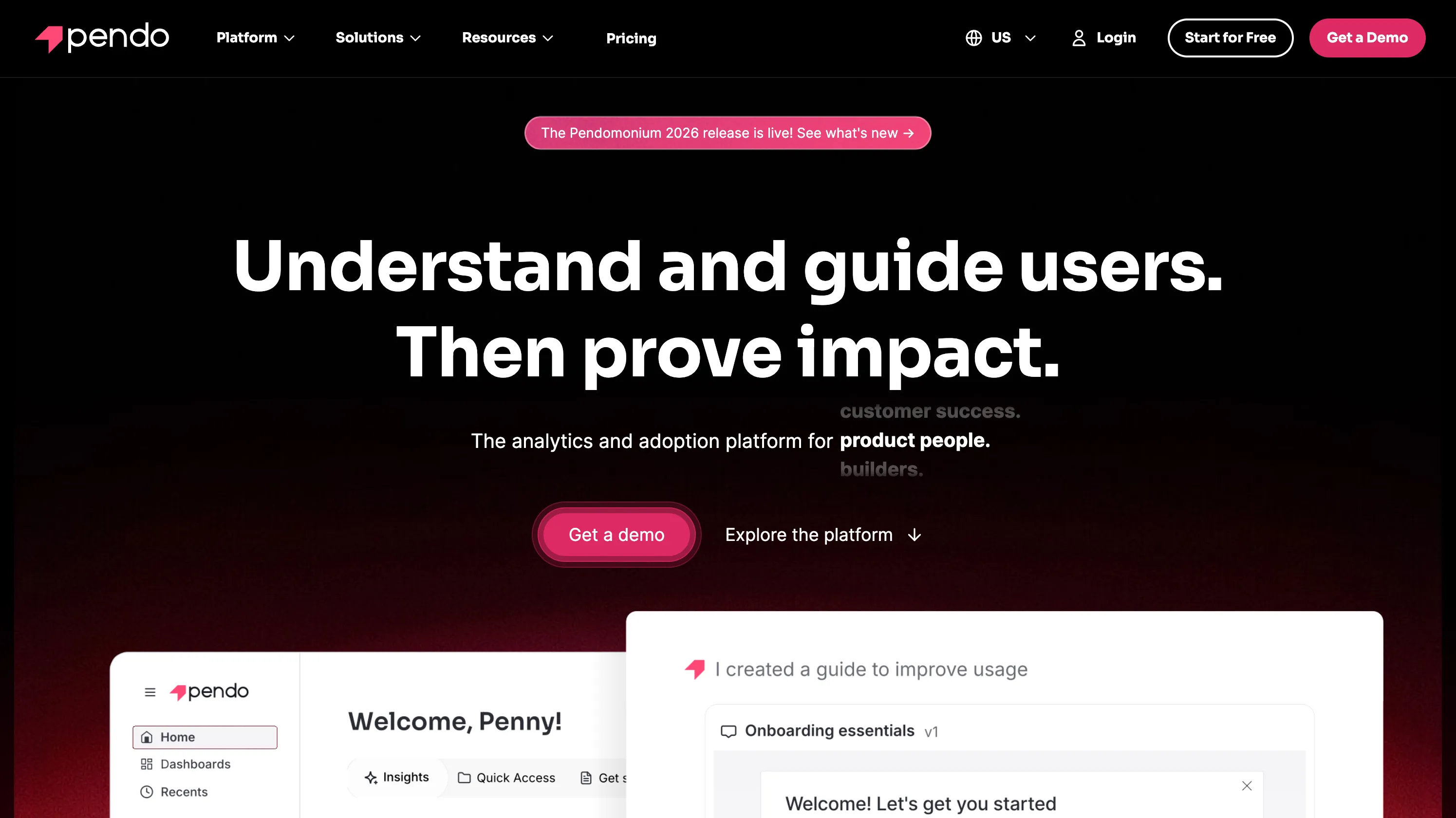
Pendo is the alternative when surveys are only one part of a bigger product operations stack. Instead of replacing Wootric with another survey tool, you replace it with analytics, guides, and onboarding flows too.
The free tier is 500 monthly active users with branded NPS only. Everything meaningful after that is custom-priced and sales-led.
What Pendo does well:
- Behavioral context - Tie survey responses to product usage data in the same platform.
- Broader product stack - Analytics, guides, resource center, and feedback under one roof.
- Enterprise posture - Governance, support, and vendor maturity are stronger than Wootric’s standalone roots.
What Pendo doesn’t do:
It is much heavier and usually much more expensive. If your real need is better product feedback, not a full product experience platform, the survey module becomes an expensive sidecar.
Where this fits: Best for mid-market and enterprise SaaS teams consolidating vendors, not for buyers who simply want a sharper Wootric replacement.
8. SurveyMonkey: Best for research-led teams needing broader survey distribution
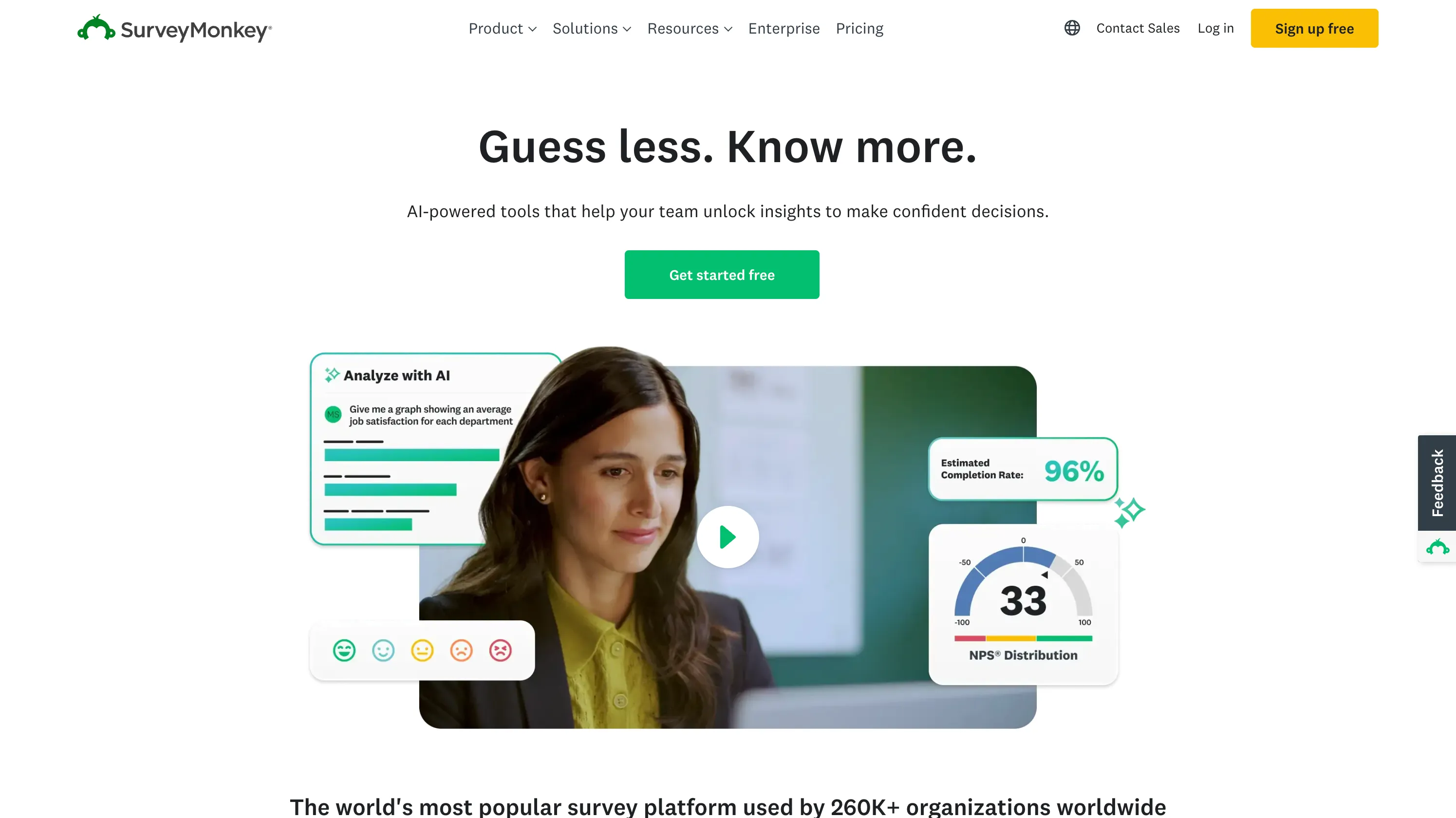
SurveyMonkey is the better answer when you are moving away from always-on in-product CX and toward broader survey research. It is built for email, links, web distribution, templates, and reporting breadth, not precise product timing controls inside a SaaS app.
Team Advantage starts at $30 per user per month, billed annually, with a 3-user minimum and 50,000 responses a year.
What SurveyMonkey does well:
- Broader distribution - Email, web links, social, and QR code workflows fit research and cross-functional teams well.
- Mature survey builder - Strong survey templates, skip logic, branching, and broader question flexibility than classic NPS tools.
- Large integration ecosystem - More than 200 integrations and a familiar export workflow.
What SurveyMonkey doesn’t do:
It is not an in-product-first SaaS feedback tool. Per-user annual pricing also makes less sense for a small product team that just wants contextual surveys inside the app.
What you’re choosing: Best if your feedback program is becoming a broader research function, not a tighter in-product product-feedback loop.
9. Zonka Feedback: Best for enterprise omnichannel CX programs
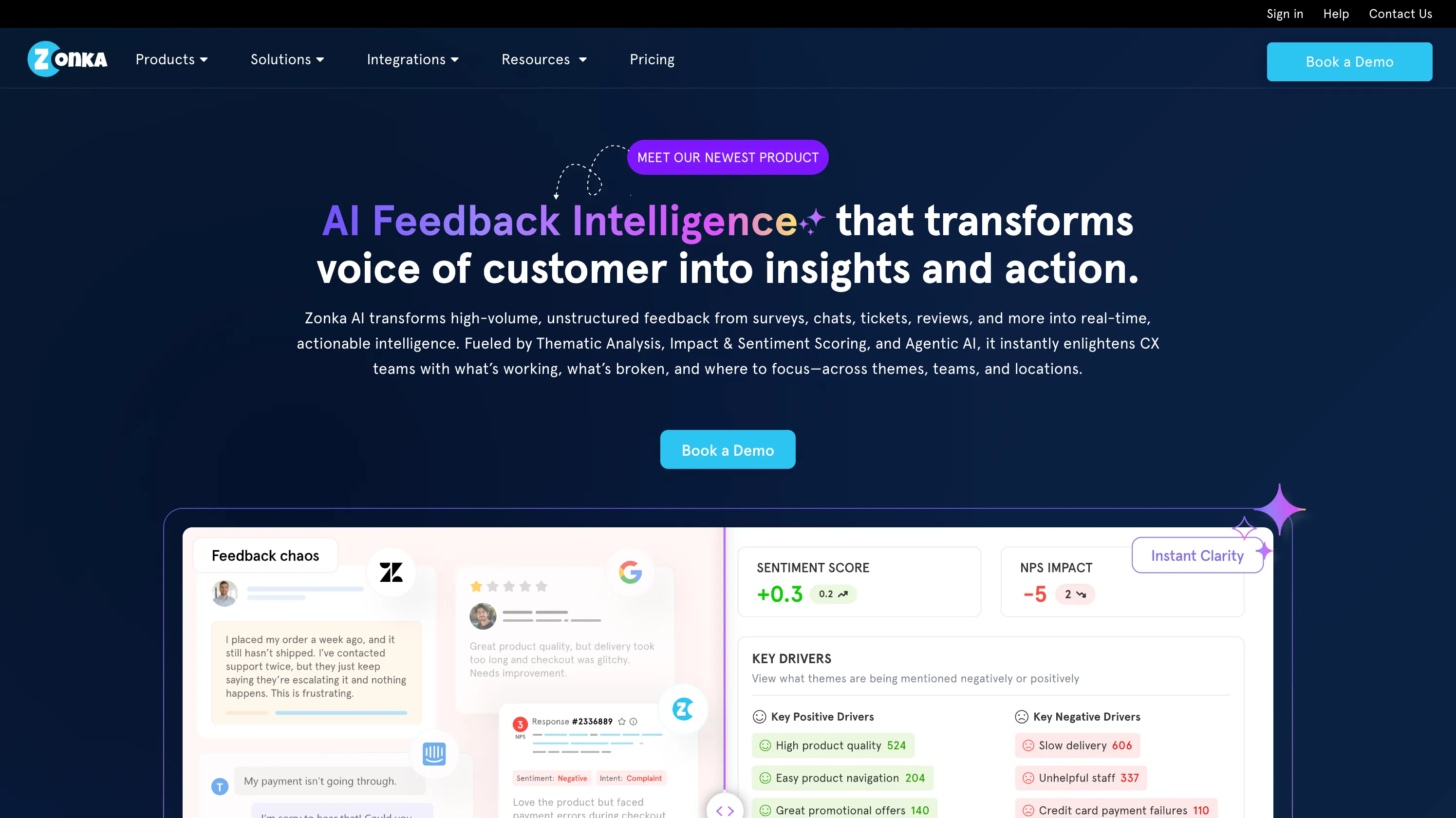
Zonka Feedback is the closest option here if you want to go bigger than Wootric, not simpler. It expands the always-on feedback model into a larger omnichannel CX platform.
No public pricing and a mandatory demo tell you the buyer profile immediately.
What Zonka Feedback does well:
- Omnichannel collection - Email, SMS, WhatsApp, in-app, web, QR, offline, and more.
- AI analysis layer - Thematic analysis, sentiment scoring, and richer routing workflows than Wootric’s simpler setup.
- Operational dashboards - Better fit for teams running feedback across departments or locations.
- Broader CX scope - Useful if you want surveys, reviews, and case-style follow-up in one system.
What Zonka Feedback doesn’t do:
It is heavier, broader, and likely more expensive than many SaaS teams need. If Wootric already felt too enterprise-shaped, Zonka is usually an escalation, not a simplification.
Where this fits: Best for enterprise CX teams that truly need omnichannel feedback intelligence and do not mind a bigger platform.
Why Wootric replacements split into two camps
Wootric sits in an awkward middle now. It started as a lightweight always-on feedback tool, but its future is tied to a larger enterprise CX story.
That leaves SaaS buyers choosing between two directions: dedicated SaaS feedback with better in-product timing, or broader platform software with surveys bundled into analytics, support, or omnichannel CX.
How to Choose the Right Wootric Alternative
Start with your actual problem, not a feature checklist.
If you want broader in-product survey coverage with clearer pricing:
- Pulseahead - Best if you want onboarding, activation, product-market fit, churn, and NPS surveys in one workflow.
- Refiner - Better if you want a dedicated microsurvey specialist and can live with MAU-based pricing.
If native mobile SDKs are non-negotiable:
- Refiner - Strong dedicated SaaS option with web and native mobile coverage.
- Iterate - Better fit if your product is mobile-first and branded in-app presentation matters a lot.
If you want email, links, and external feedback sources in the same platform:
- Survicate - Best balance of multi-channel feedback and modern analysis.
- Zonka Feedback - Better if your program is becoming a broader enterprise CX operation.
If your feedback program mostly lives in support workflows:
- Nicereply - Best for agent-level CSAT, CES, and NPS tied to helpdesk tools.
- Simplesat - Better for service-heavy teams running larger support and review workflows.
If you are really buying a broader analytics or research stack:
- Pendo - Best when surveys are one part of a larger product operations platform.
- SurveyMonkey - Better when your feedback work is shifting toward broader research and external distribution.
Staying on Wootric if:
- You mainly need always-on NPS, CSAT, and CES, already have the CRM and helpdesk integrations wired in, and enterprise pricing friction is not a real problem for your team.
Bottom line
Wootric still works for the old job it was built for. The issue is that many SaaS teams no longer need only that job.
If you want a simple NPS replacement, there are plenty of those. If you want a better SaaS feedback system, the strongest options here either go deeper on in-product timing or clearly justify the extra platform weight.
Ask yourself: are you replacing a survey metric tool, or are you trying to build a feedback loop your product team can actually use every week?
Try Pulseahead free and launch a lifecycle survey in under 10 minutes.
Run SaaS feedback without enterprise-suite friction.